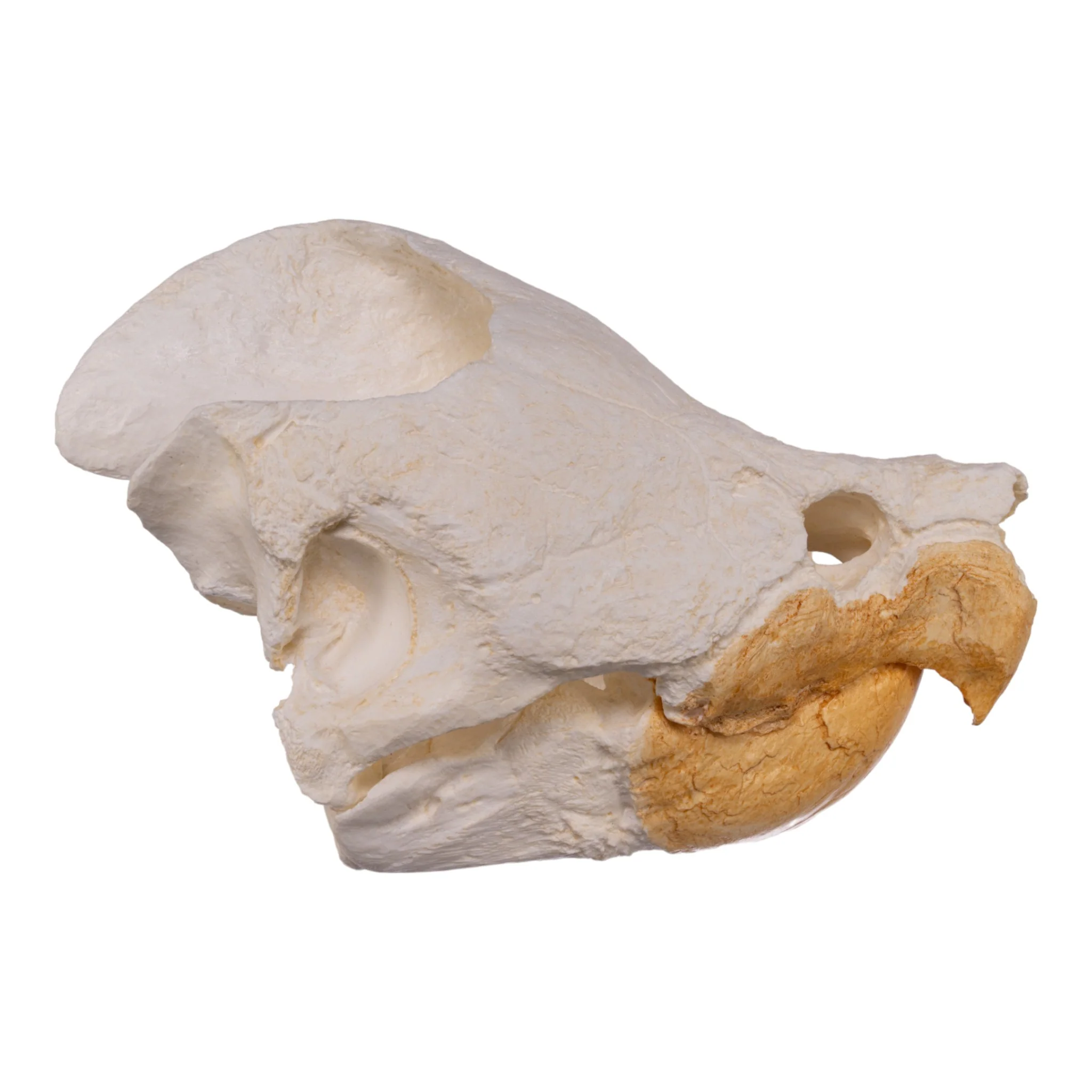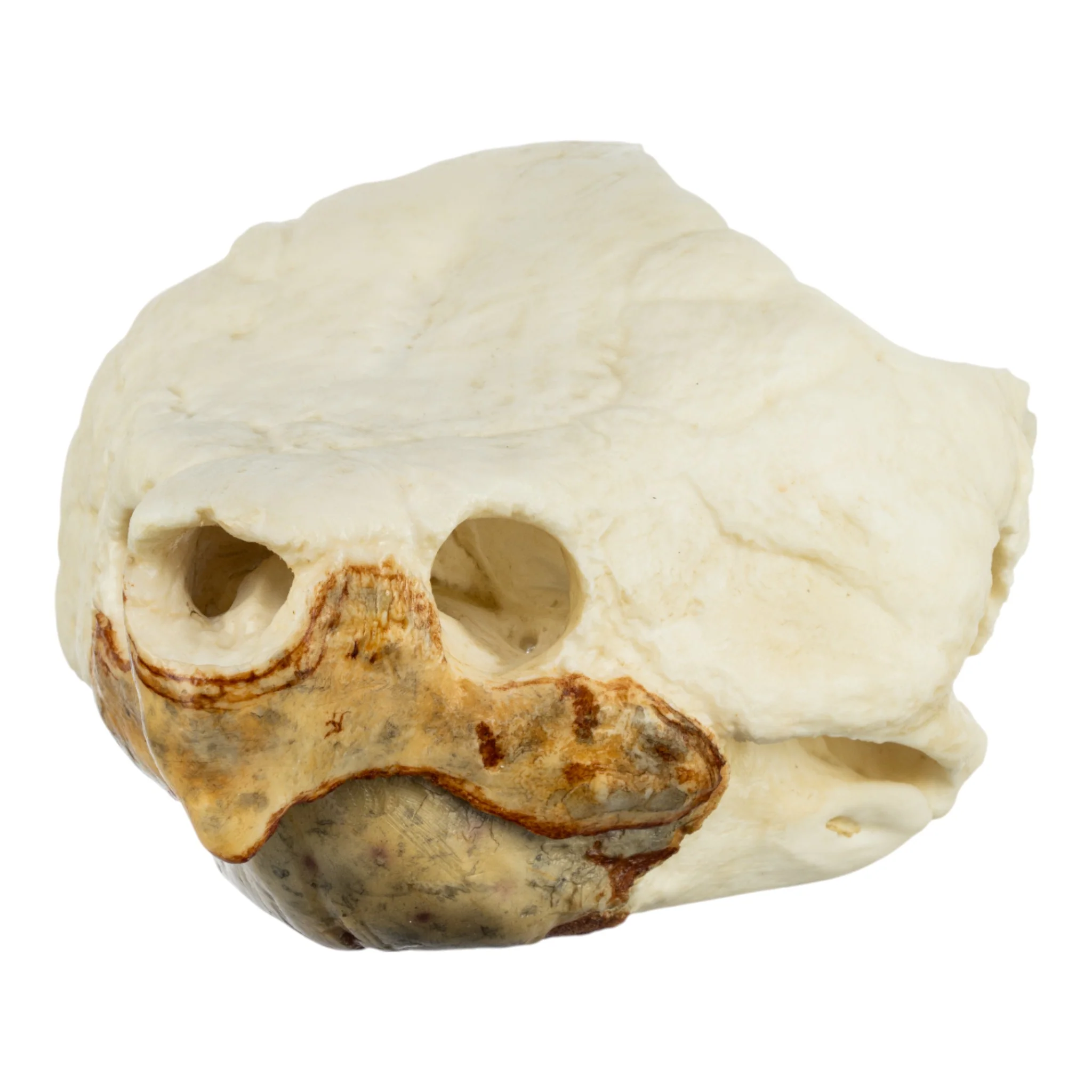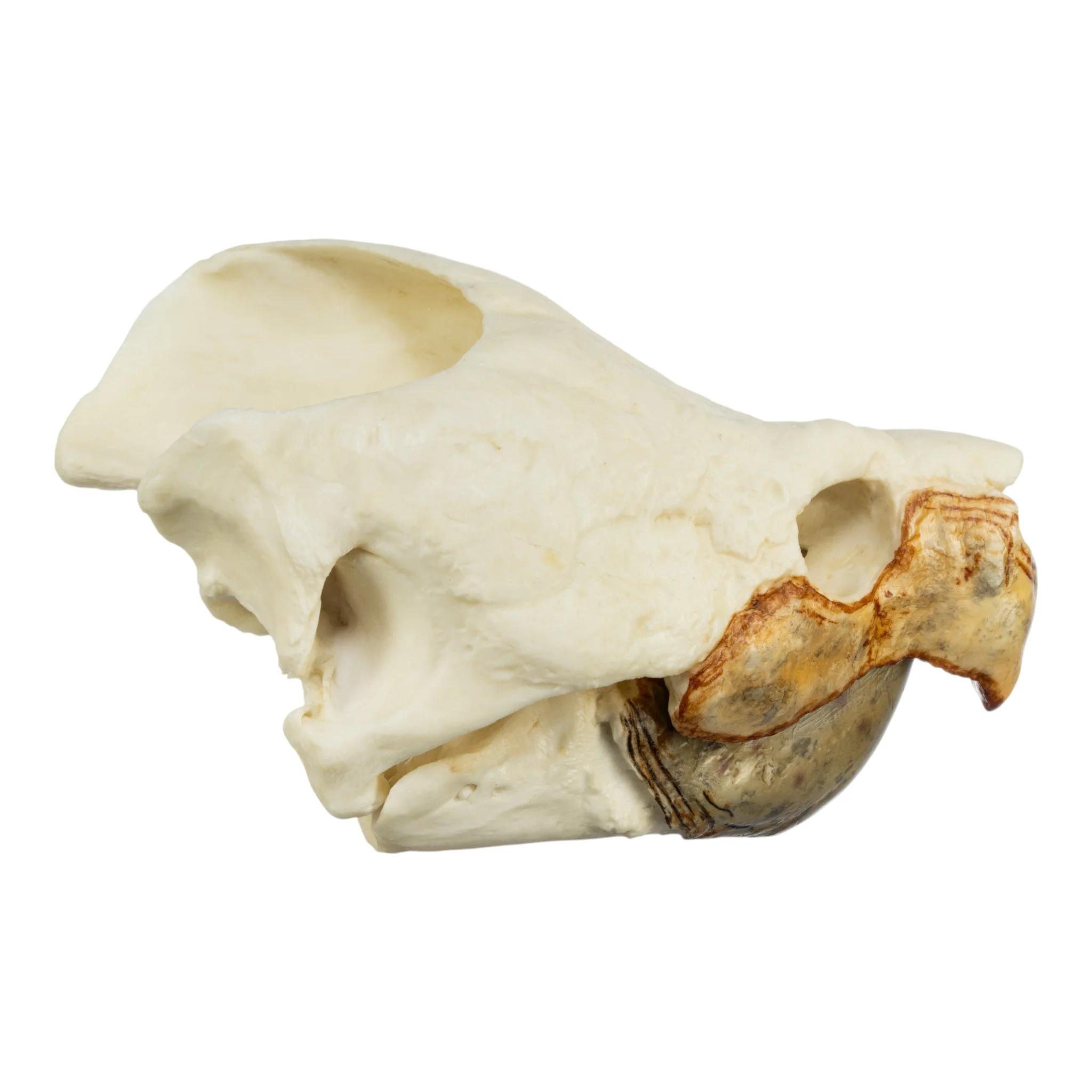
Real Common Snapping Turtle Foot - Freeze Dried
The common snapping turtle is a large freshwater turtle found across North America, particularly in slow-moving rivers, lakes, and ponds. Known for its powerful jaws and aggressive temperament when out of the water, this turtle has a rugged, ridged shell and a long, spiked tail. It is omnivorous, feeding on a variety of aquatic plants, fish, invertebrates, and small mammals, and plays an important role in its ecosystem as both predator and scavenger.
Specifications:
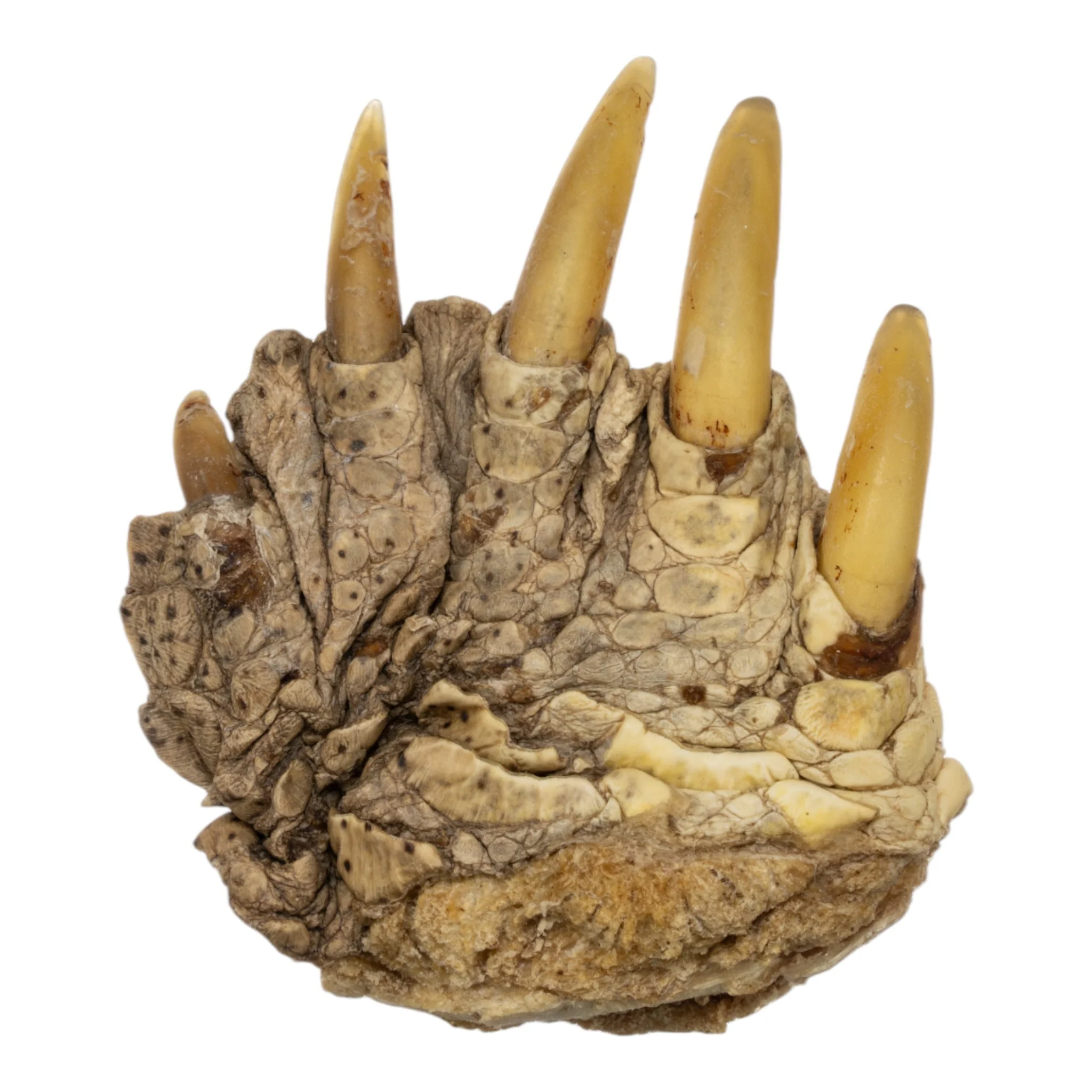
- The photos shown are examples of what your specimen will approximately look like. Each foot is unique and will vary in size, shape, color, etc.
- Feet may appear dusty or flaky; this is natural
- May be missing one or two claws
- Average Greatest Length 4.5-7 cm (1.8-2.8 in.)
- Average Greatest Width 4-5 cm (1.6-2 in.)
The common snapping turtle is a large freshwater turtle found across North America, particularly in slow-moving rivers, lakes, and ponds. Known for its powerful jaws and aggressive temperament when out of the water, this turtle has a rugged, ridged shell and a long, spiked tail. It is omnivorous, feeding on a variety of aquatic plants, fish, invertebrates, and small mammals, and plays an important role in its ecosystem as both predator and scavenger.
Specifications:
- The photos shown are examples of what your specimen will approximately look like. Each foot is unique and will vary in size, shape, color, etc.
- Feet may appear dusty or flaky; this is natural
- May be missing one or two claws
- Average Greatest Length 4.5-7 cm (1.8-2.8 in.)
- Average Greatest Width 4-5 cm (1.6-2 in.)
Original: $5.00
-65%$5.00
$1.75Description
The common snapping turtle is a large freshwater turtle found across North America, particularly in slow-moving rivers, lakes, and ponds. Known for its powerful jaws and aggressive temperament when out of the water, this turtle has a rugged, ridged shell and a long, spiked tail. It is omnivorous, feeding on a variety of aquatic plants, fish, invertebrates, and small mammals, and plays an important role in its ecosystem as both predator and scavenger.
Specifications:
- The photos shown are examples of what your specimen will approximately look like. Each foot is unique and will vary in size, shape, color, etc.
- Feet may appear dusty or flaky; this is natural
- May be missing one or two claws
- Average Greatest Length 4.5-7 cm (1.8-2.8 in.)
- Average Greatest Width 4-5 cm (1.6-2 in.)