Real Diaphonized Mouse Skeleton
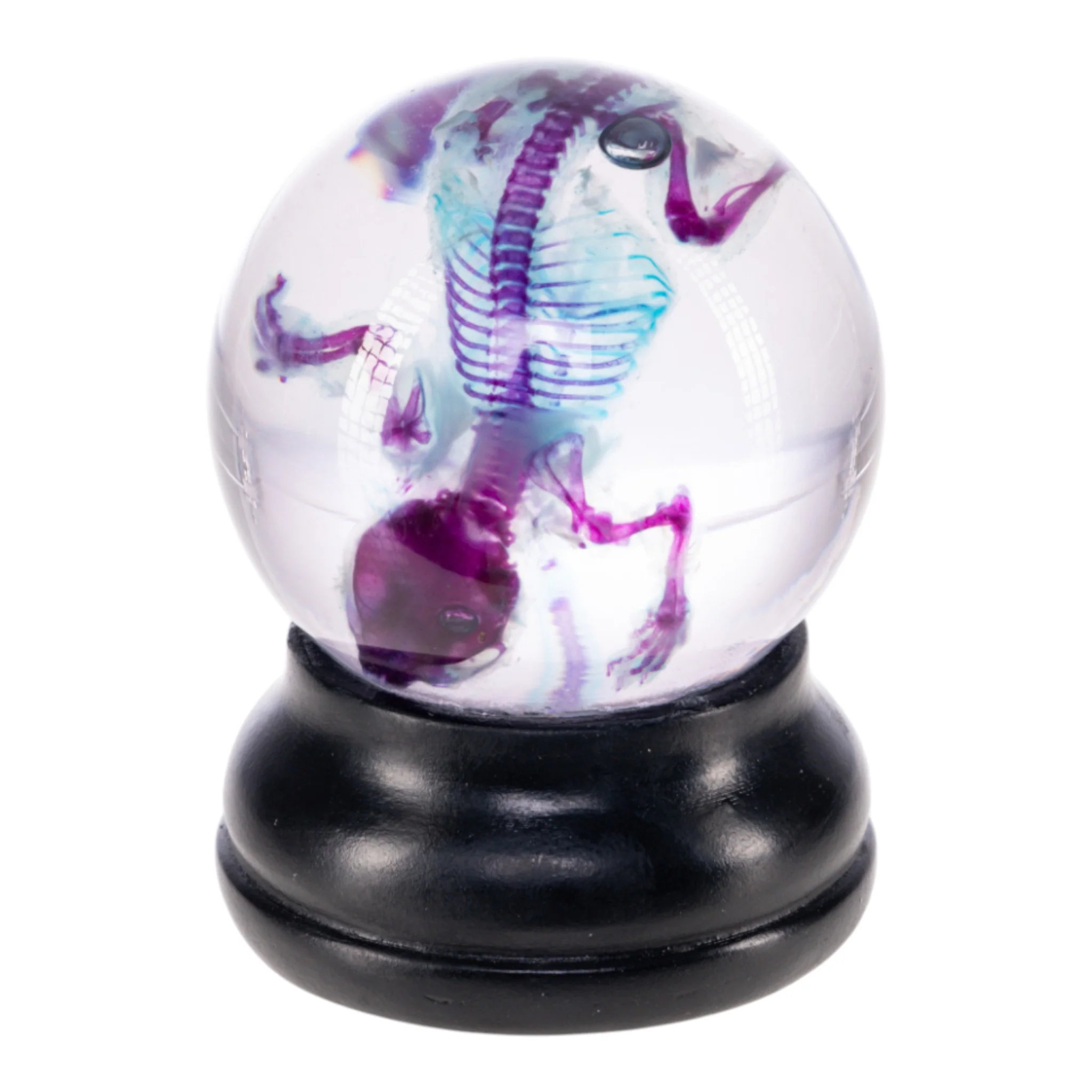
This real diaphonized mouse skeleton is preserved in a clear fluid-filled glass vial, showcasing its vividly stained bones and soft tissues in rich purples and blues. The transparent container allows for full 360° viewing of the specimen’s anatomical structures, making it an excellent reference for biological study, classroom demonstration, or display in a scientific curiosity collection.
The term "mouse" can refer to any number of small rodents within the Muridae family. The House mouse Mus musculus , is often associated with human populations and can be found on every continent. Mice, like all rodents, have ever-growing incisors, and therefore, need to chew on wood or other materials to wear them down. This, along with their appreciation for human food and crops, and the propensity to spread disease, causes the mouse to be one of humanity's worst pests.
- Species unknown
- The photos shown are examples of what your specimen will approximately look like. Each mouse is unique and will vary in size, shape, color, etc.
- Jar Height 8.9 cm (3.5 in)
- Jar Width 4 cm (1.6 in)
This real diaphonized mouse skeleton is preserved in a clear fluid-filled glass vial, showcasing its vividly stained bones and soft tissues in rich purples and blues. The transparent container allows for full 360° viewing of the specimen’s anatomical structures, making it an excellent reference for biological study, classroom demonstration, or display in a scientific curiosity collection.
The term "mouse" can refer to any number of small rodents within the Muridae family. The House mouse Mus musculus , is often associated with human populations and can be found on every continent. Mice, like all rodents, have ever-growing incisors, and therefore, need to chew on wood or other materials to wear them down. This, along with their appreciation for human food and crops, and the propensity to spread disease, causes the mouse to be one of humanity's worst pests.
- Species unknown
- The photos shown are examples of what your specimen will approximately look like. Each mouse is unique and will vary in size, shape, color, etc.
- Jar Height 8.9 cm (3.5 in)
- Jar Width 4 cm (1.6 in)
Original: $100.00
-65%$100.00
$35.00Description
This real diaphonized mouse skeleton is preserved in a clear fluid-filled glass vial, showcasing its vividly stained bones and soft tissues in rich purples and blues. The transparent container allows for full 360° viewing of the specimen’s anatomical structures, making it an excellent reference for biological study, classroom demonstration, or display in a scientific curiosity collection.
The term "mouse" can refer to any number of small rodents within the Muridae family. The House mouse Mus musculus , is often associated with human populations and can be found on every continent. Mice, like all rodents, have ever-growing incisors, and therefore, need to chew on wood or other materials to wear them down. This, along with their appreciation for human food and crops, and the propensity to spread disease, causes the mouse to be one of humanity's worst pests.
- Species unknown
- The photos shown are examples of what your specimen will approximately look like. Each mouse is unique and will vary in size, shape, color, etc.
- Jar Height 8.9 cm (3.5 in)
- Jar Width 4 cm (1.6 in)