Japanese Star Sand
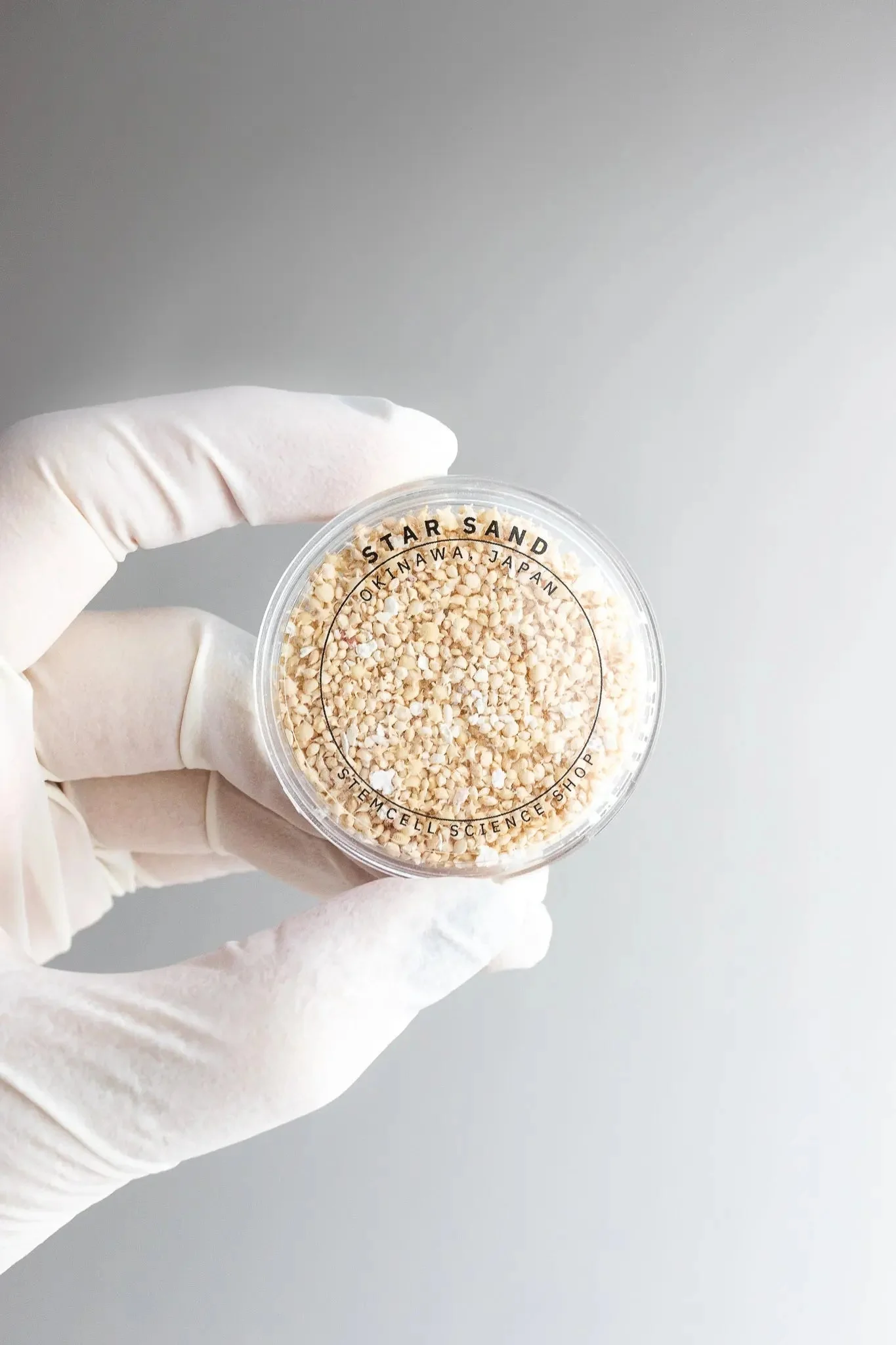
This “sand” is actually not sand at all. Rather than rock fragments, it is made of tiny, star-shaped exoskeletons.
Each piece is a exoskeleton of a tiny sea creature from the Foraminifera group. These amoeba-like organisms have existed for about 542 million years, and over 50,000 species are known.
Their innumerable remains can be found on some beaches, but only a few beaches in the world are made of star sand. This particular sample is from Ishigaki Island in Okinawa, Japan.
Foraminifera are useful as index fossils, which means they can be used to date rock formations reliably. They are particularly helpful for the Permian, Jurassic, Cretaceous, and Cenozoic time periods.
We recommend examining them under a magnifier or microscope for a closer look.
Okinawan star sand displayed in a round acrylic case.
Container Dimensions: 1.75" x .25"
This “sand” is actually not sand at all. Rather than rock fragments, it is made of tiny, star-shaped exoskeletons.
Each piece is a exoskeleton of a tiny sea creature from the Foraminifera group. These amoeba-like organisms have existed for about 542 million years, and over 50,000 species are known.
Their innumerable remains can be found on some beaches, but only a few beaches in the world are made of star sand. This particular sample is from Ishigaki Island in Okinawa, Japan.
Foraminifera are useful as index fossils, which means they can be used to date rock formations reliably. They are particularly helpful for the Permian, Jurassic, Cretaceous, and Cenozoic time periods.
We recommend examining them under a magnifier or microscope for a closer look.
Okinawan star sand displayed in a round acrylic case.
Container Dimensions: 1.75" x .25"
Original: $12.00
-65%$12.00
$4.20Description
This “sand” is actually not sand at all. Rather than rock fragments, it is made of tiny, star-shaped exoskeletons.
Each piece is a exoskeleton of a tiny sea creature from the Foraminifera group. These amoeba-like organisms have existed for about 542 million years, and over 50,000 species are known.
Their innumerable remains can be found on some beaches, but only a few beaches in the world are made of star sand. This particular sample is from Ishigaki Island in Okinawa, Japan.
Foraminifera are useful as index fossils, which means they can be used to date rock formations reliably. They are particularly helpful for the Permian, Jurassic, Cretaceous, and Cenozoic time periods.
We recommend examining them under a magnifier or microscope for a closer look.
Okinawan star sand displayed in a round acrylic case.
Container Dimensions: 1.75" x .25"